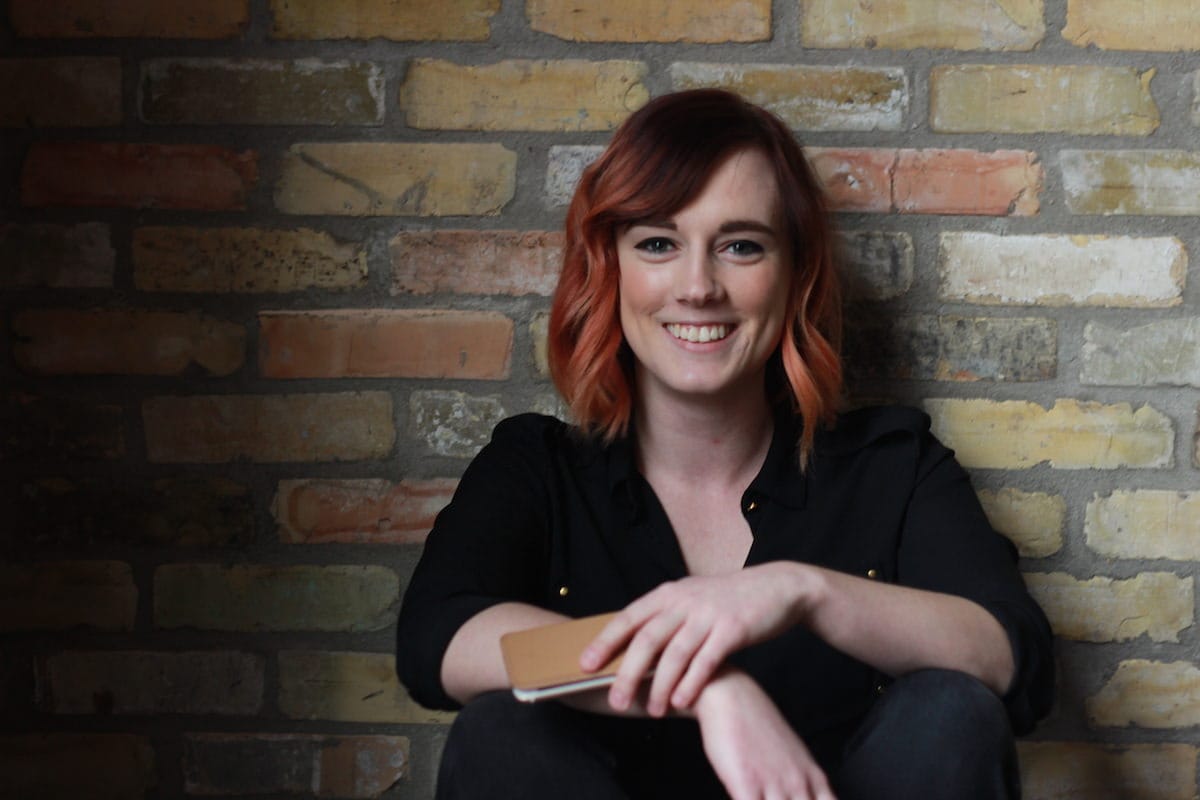
Amandah Wood is a writer, editor and founder of Ways We Work, a publication that dives into people doing work they love. In this episode Amandah shares her experience storytelling and finding exactly what makes people tick.
Episode Transcript
Sam Solomon: This is DNFM, I’m Sam Solomon. DNFM features the latest stories in design and tech, brought to you by Designer News. This is Episode 4. We’ve got a fantastic show for you guys today. We’ve got a few announcements, our top stories, and then later on, my guest Amanda Wood will be joining us. You’ve likely seen her work on Designer News.
She is the founder and editor of Ways We Work. It’s a fantastic publication featuring stories with people who absolutely love the work that they do. We’ll be talking about her experience building the publication, interviewing people in the tech world, and maybe she can let us in on the secret of how people find work that they love.
We’ll get to that in a bit, but first the announcements. I’ve got a handful of updates related to Designer News Meetups. We’ll be in Toronto on September 15th, Shopify has been very gracious to host us, the London Meetup will be on September 29th, while the San Francisco Meetup will be on October 13th.
We’re still trying to figure out venues for those last two events, we’ll definitely keep you posted. But I would plan on coming to these. This is a great way to get out and have a couple of beers and meet a few of your fellow designers. All right, that’s it.
And now for top stories, we’re going to be doing something a little bit different with top stories. Once again, uh, you’ve heard my own monologues and thoughts. You’ve heard us have guests like Joel Khalifa on the show. This week we’re going to be trying something a little bit different. We’re going to be using anchor.
fm And I’m going to ask questions on anchor. fm and we’re going to plug in responses from the designer news team So once again, this is a bit of experiment. So sit tight. Let us know if you like it Okay, here we go.
So our first top story is TheDesignTeam. io. Design Team is a new comic series by illustrator Pablo Stanley. The series follows a junior designer who just moved to San Francisco to join a startup. The comic pokes fun at the tech world and the quirky design culture that goes along with it. What’s your opinion of it?
Is the series over exaggerated, or does it hit the mark?
Guest: I think Pablo totally hits the mark on his new comic series. Um, it seems to be really striking a chord with a lot of designers on the site, because it just feels like a really Well done, accurate, um, parody, and it’s just really fun to see how he explores the idiosyncrasies, the quirks, the annoyances that designers face.
And he also seems to be pushing these out at a pretty admirable pace. Um, so I’m really excited to see where he takes the series. I think Pablo hit the mark here, or is at least definitely onto something. Uh, the comic as a whole certainly is well illustrated and, and the jokes are fun and light hearted.
Um, but probably most of all, it’s, it’s, it’s sort of maybe a breath of fresh air, for lack of a better term, to kind of take a step back and realize, you know, it’s, It’s nice to kind of see, um, you know, these themes and, and these ideas talked about in, in a, in a, in a sense that kind of takes away the, the, the stress and the seriousness of a, of a situation and, and gets us to kind of realize, um, you know, what we’re doing day to day maybe doesn’t always have to be as convoluted and complicated as we make it out to be.
Sam Solomon: Hell Next Door reduced racist posts. About a year ago, a problem was brewing at Neighborhood Social Network next door. The crime and safety section of the community had become a haven for racial profiling. The company began a pilot program to see if they could reduce racial profiling by changing how crimes were reported.
The design team took a few steps. They separated crime and suspicious activity. They added additional tags when race was mentioned in a post asking users to distinguish this person from other similar people, things like hair, what type of shirt they had on shorts, their shoes, but introducing more friction and providing prompts to help users reflect on the situation.
They reduced the number of racist posts by about 75%. Do you have any takeaways from this for current projects? What are your thoughts on this approach to add more friction?
Guest: Yeah, this is a really interesting story and the community reacted quite highly to it. Um, I think it was cool to see how adding friction actually help the user, which seems quite ironic to most UX designers, I think.
It’s pretty fascinating to see how, you know, a design decision like that can help sort of mitigate implicit racial bias. As long as they can straddle the line correctly, where they don’t make users jump through too many hoops, you know, so that they’re deterred, but at the same time add that necessary friction.
Um, I think they did a fantastic job and it’s kind of like a really unique case study next door. Reducing racist posts by 75 percent is certainly a major plus for the platform. Um, but I think the even bigger one here is, uh, them realizing that they had a, um, um, a major issue and challenging themselves to, um, provide a solution.
You know, they, they might not be able to stamp it out completely, but, um, you know, both. Um, from a business perspective and a moral obligation, um, you know, being part of the solution again is a major win in, in, in a great way to, you know, encourage other tech companies to certainly do the same.
Sam Solomon: Pattern, a simple drawing app for user experience. This was one of the most upvoted stories on Designer News in the past week. A product of former Facebook designer Andy Chung, Pattern is a simple drawing application built for early stage design and ideation. Some of the early commenters suggested that the app might be a bit buggy, that perhaps there were some questionable interaction design decisions, such as hiding key tools behind a menu.
Aside from those issues, will you use this tool in your own workflow? Why or why not?
Guest: Yeah, this was really upvoted a lot, and I think it was maybe the same situation as when you, you share a link without maybe reading the full article. I think people got really allured by the video and just the idea, but as you said, some of the commenters were, were pretty poking at the Unstability of the app in terms of the utility I think like the instant sharing would be great just being able to export it in a second It certainly looks really clean and you can absorb it But I mean, it’s kind of just emulating pen and paper anyways And I think you can probably find you know A dozen other alternatives on the iPad Pro for just simple sketching like that Um, so yeah, I mean, I guess everyone has mixed feelings on it.
Sam Solomon: Mozilla’s open design logo concepts. Mozilla is modernizing their brand identity. At Mozilla, open source and transparency are core to the company. With that said, they’re using this open design process for this new branding. To be clear, this isn’t something that’s crowdsourced. It doesn’t involve voting, but it does let people weigh in with their feedback.
What do you think about this process? Is it a good experiment, or is this something that’s just going to end up as design by committee?
Guest: I actually like the idea in this sense. Uh, the open design process certainly could be scary, but, um, it seems, seems to me that Mozilla’s pretty open and honest with their, their approach, not only for the design process as a, you know, as a whole, but then also the, uh, the intended outcome.
You know, they, they, they go so far as to say, Um, you know, ideally Mozilla will have a brand that better matches the work that they do for the world. But also in reality they, you know, they realize the outcome is uncertain. Um, I think probably the, uh, the bigger piece here is that it’s just the idea of being able to contribute, um, you know, to the design community as a whole is, is pretty incentivizing, you know, for designers in general.
Sam Solomon: My guest today is Amanda Wood. She is the founder and editor of Ways We Work, a publication telling stories about people doing work that they love. Amanda, welcome to the show.
Amandah Wood: Thanks so much for having me.
Sam Solomon: So after doing all of these interviews, is it, is it funny being interviewed yourself?
Amandah Wood: Yeah. Yeah. Um.
It is because it’s only really been the last few months that we’ve been on a couple of podcasts, myself and my partner Matt on the project. Um, and then, and then interviewed for, for various different mediums as well. So it’s kind of a fun experience for sure.
Sam Solomon: Well, I’d like to, for those that don’t know about Ways We Work, I’d like to read a couple paragraphs from your website about it.
The idea that we can make a living doing work that we love is driving more people to pursue their passions every day. But what does that really look like? Behind every success is an immense amount of anxiety, challenge, and often failure. So often we hear people or companies when they’ve launched a new product hit a major milestone or when they’ve failed.
WaysWeWork wants to hear from people when they’re in the trenches. Honest and candid conversations with people who are discovering the rewards and challenges of what it means to do work that they love. So, I think that’s a fantastic description, by the way. Um, but, I mean, based on, on your interviews that I’ve read, and a lot of these other things, it seems to me that Ways We Work perhaps, uh, started with a question you were trying to answer yourself.
Is that true?
Amandah Wood: Yeah. Yeah. Um, it definitely is. It, it really, uh, started, I was in my first job just outside of university, um, having just graduated and I was working in marketing and doing like some front end development for, for a local, um, restaurant group, um, where I’m from in Waterloo. It just being my first job out of school, I think like anyone, you’re kind of learning, you know, how to manage your time.
Um, how do you, um, How do you make the most of your time? How do you be the most effective with the tools you’re using? Um, you know, and just building what my actual habits were, because all of my habits were built around school and, um, and, and learning and, and that environment. And so I had to obviously learn a new way of working.
Um, Being out in the working world, I guess. Uh, so I was kind of feeling like I was like, I had all these questions, like which tools should I be using? Um, you know, what’s the best way to sort of divide my time up amongst all the meetings I need to go to and all the people I need to talk to versus like actually getting my work done throughout the day.
And I was really struggling with that. And I’m like, you know, I feel like the best thing to do would be to go and talk to other people and to find mentors, obviously. And I just sort of did that. Through, um, the mediums that I was familiar with, which was social media. And, and then the idea for the blog kind of grew out of that.
And I started contacting people over email originally, which just a set of questions of like, this is what I’d like to know about like how you do your work.
Sam Solomon: So you were doing, you were reaching out to people before you decided that like, Hey, other people might actually find this relevant or interesting.
Amandah Wood: Yeah. Yeah. It was kind of like my very introverted search for mentors. You know, I was going out to events and, um, and meeting up with people that way, but you know, kind of networking events and group get togethers aren’t really great places to have, you know, one on one conversations and get people to really open up about things.
So, um, I, I just sort of started with like, okay, well, here’s the questions and, and the list of questions that I sent, they’re not crazy, but they’d be kind of weird to walk up to someone, you know, in a bar at a networking event and just start asking
Sam Solomon: them. Hey, I’ve got these few things I’d like to ask you.
Amandah Wood: Yeah, yeah, exactly. So, um, you know, having the blog and having a place to sort of showcase people’s answers sort of gave me license to ask these questions and, and people, you Really seem to tag on to the idea right away.
Sam Solomon: Well, as far as putting this blog together, in other interviews I’ve heard you talk about the importance of just getting started, um, and that like everybody wants to skip version one and get to whatever in their head is the, what they think the perfect version is.
Why do you think that is?
Amandah Wood: Oh my gosh, yeah, I wish I knew. I still have a little bit of that problem myself. Um, you know, I think I managed to combat it when I was starting WaysWeWork, because it started as a very, very basic, like, WordPress blog. Um, but even then I spent time making a logo and a brand, and, um, you know, making sure everything was just right.
Even though I look back at it now and I’m like, oh my gosh, that was, That was the first, that’s what that looks like. Um, but I think it’s just that we have, um, we have really high expectations of ourselves generally, especially people sort of in, in creative professions. I would say there’s actually a great.
Video and I can’t remember. I want to say it was like ira glass or something the gap about how like our tastes don’t match our Our skills right away and like our skill level right away, and I think that’s 100 percent it, you know, like we have Really great tastes and we have really high expectations, but like our skill level just doesn’t match Isn’t there right away.
Sam Solomon: Yeah, that video I believe is the is the gap which I think there’s a that use that video uses a Quote from ira glass. That’s uh, that is it’s it’s pretty it’s pretty interesting in what ways has ways we work changed between You know version one Uh, and now like what what are some of the things that have worked?
Uh that haven’t worked
Amandah Wood: man. It’s changed a lot I feel like it’s kind of always it’s constantly evolving. But um, You Some of the big changes, I would say probably a year or so, over a year ago now, I tried doing one interview over Skype rather than sending, you know, written questions over email, and I loved that experience right away, you know, connecting with someone and talking with them and that kind of thing.
Yeah. Um, and that was really awesome. But then I also had the challenge of, you know, transcribing this hour long chat. Uh, so that was, that was the first kind of step. But then after that I realized like, Oh my gosh, the quality is so much better. The quality of the conversation. Um, the, the, the sort of like openness from the person I’m talking to is so much better.
So I decided from then on to do all of the interviews, Which, you know, equaled much more hours spent on the project because of transcribing and editing and all of that. Um, and then another big way is when Matt came on. So Matt Quinn is my partner on the project and he came on about a year ago. Year or so ago too, and had this idea of sort of expanding the individual interviews out to teams and how we could profile teams about how they were working together.
Cause obviously, you know, um, a lot of great work isn’t done in this silo. Um, you know, it’s done with other people and collaborating with other people. So we tried out one of those and that worked really well. And, and it was kind of, that series has sort of grown from there as well. Um, Oh my gosh, what else?
There’s been been a lot of things. I don’t know how how deep in details you want Well,
Sam Solomon: no that I mean that that’s good because I was going to ask you Um, you got you started, uh with individuals and i’ve noticed, uh, you know more recently there are More teams that go up there. You said that was matt’s idea What what was the thought process behind let’s talk to whole teams and do these feature stories on teams as opposed to Just sticking with individuals
Amandah Wood: Yeah, well, um when he first came to me with the idea we We started talking about it a little bit and I was like, well, what, you know, what would that look like?
Cause so many different teams are, you know, different sides, there’s various sizes of teams and types of teams. And, you know, what sort of teams should we focus on? And, um, we’ve ended up mostly focusing on designer product teams. Um, and, and trying to dig as deep as we can. So someone working on a specific, a team working on a specific product, um, and whenever we can do that, cause then you can really dig into their process and, and how they work.
And I think, I think the idea was just kind of like I said before, you know, like, A lot of great work isn’t created just from an individual. Uh, so it’s, it’s awesome to be able to tie kind of these individual roles and these individual experiences into also this like greater picture of, Hey, here, here’s these individual experiences, but here’s, How they kind of, uh, add up to how a team collaborates together and how a team works together.
Sam Solomon: You said that, uh, you know, you guys are kind of focusing on people in like design, like product teams, things like that. But you’ve got interviews with, with a lot of people that work in technology, but you’ve also talked with writers and photographers. I saw you did an interview with a glassblower, like what draws you, uh, what draws you to these, these different people?
You know, what. I guess it makes you interested in people’s occupations.
Amandah Wood: Mm hmm. Um, the short answer is just, I’m really curious, personally. Um, and I think, You know, we focused a lot on, on tech and, and designers and creative professionals, because that’s sort of what myself and Matt know so well. I went to school and got a fine arts degree, so that’s kind of my background.
Uh, so that’s always felt really natural, but at the same time, um, I’ve always been very like Jack of all trades person, never really happy settling on one thing. So for me, I think that’s where my curiosity comes from for, for different roles. You know, like I want to know, you know, like a glassblower, for example, Matt was the one who did that interview, but it’s super interesting to me because, you know, how is this person making a full time living doing this?
Are they, um, you know, what are the different challenges that go along with that? Cause I just feel like. It’s, it’s really important to, to show those just to give like a little bit of reality behind, um, you know, what, what doing work you’re really passionate about means and what it actually takes. Um, yeah, that’s a long answer, but
Sam Solomon: I think it’s, I think it’s also interesting because you’ve got people that have all of these very interesting skills.
Um, that they’re using every day. And I mean, I don’t know anybody that is a glassblower. So as someone working kind of in the design industry, uh, you know, that’s, that’s fascinating to me. Um, so I, I think that, I think that that’s interesting. So you’ve been doing all these interviews about a people and obviously the, the way people work, have you learned like what.
love about their jobs? Like, what is, what is the, the secret?
Amandah Wood: I’ve learned so much in all different verticals, I feel like. Um, you know, so for me personally, it’s been such a great experience. Cause I feel like I’ve gained such career wisdom so fast, um, that I wouldn’t have in any other way. But. This is referencing one interview, but I feel like it spans across all of them.
I did one with Cap Watkins, uh, who’s the VP of design at BuzzFeed, and he said, you know, um, you’ll be happy in a role as long as you feel like The problems and challenges you’re facing are ones that you feel are valuable to solve, um, and that’s not a direct quote, but and basically, I think that’s kind of stands true for everyone.
You know, there’s no job that’s going to be easy. And if it is easy, you probably don’t want to do it, or it’s probably not worth doing. Um, so whenever you’re doing work that you are really passionate about and you actually find meaningful, it’s going to be hard. There’s going to be challenges. There’s going to be problems and they’re not always going to be easy to solve.
But as long as you still feel like you find them valuable and find them, uh, and you care about them, that’s what kind of equals.
Sam Solomon: So, you know, when I was, I guess I still am doing interviews, but specifically when I was, when I was doing Signal Tower, I kind of felt like each interview I did, I got closer to these people who I admired, who I wanted to be like. Do you feel the same about, about ways we work?
Amandah Wood: Yeah, I definitely do, but I think, um, the one thing I would add to that is that I, it’s also been really refreshing to sort of get to know these people past either, you know, their, their Twitter feeds or their Instagram feeds, right?
Because that’s all you sort of see on a day to day basis. So to, to get to know them and to understand that like they, That’s the biggest thing I would think across the board is that no matter who I talk to they’re all human beings. They’re all You know usually very nice and and and just doing their best and everyone has their own challenges that they’re facing So that’s been a really sort of like Humbling experience to
Sam Solomon: have you had anybody be like mean or excessively rude to you like,
Amandah Wood: um,
Sam Solomon: you don’t have to say their names.
Actually, please don’t say their names. But
Amandah Wood: no, no, no, no, nobody. Nobody’s been excessively rude. I would say that there are a few people who, you know, maybe they just do a lot of interviews. They’re not as excited about the opportunity as most people are. Which is fine, you know, there’s nothing, there’s nothing wrong with that, but it’s, um, it’s always nice when someone’s really excited and really engaged, obviously.
Sam Solomon: Yeah, it absolutely is. So you said, You started doing these interviews over Skype about a year or so ago. How, how many interviews would you say you’ve done to date?
Amandah Wood: About mid March of this year, uh, we hit a hundred. So, I don’t know how long it’s been since then. How,
Sam Solomon: you guys publish once a week? Is that?
Amandah Wood: Yeah, so the interviews are once a week and the team features are pretty much as often as we can.
Sam Solomon: Is that a, is that a schedule you stick to religiously?
Amandah Wood: It is, um. There’s been a couple, there’s been a couple of breaks. Um, you know, we always kind of break over Christmas and then actually this week there wasn’t an interview either.
Normally in August we tend to take one, uh, one week off.
Sam Solomon: Well, that’s, I mean, that’s pretty, uh, amazing consistency, like being able to publish interviews on, on a weekly basis. What, I guess, uh, you know, this, this is my turn to do the ways you work. Like what, uh, what’s, what’s your secret, what process do you guys use to do that?
Amandah Wood: That’s a good question. I’ve tried a lot of different things, um, in terms of organization to sort of keep the pipeline going. Um, I used Trello for a while to help keep track of everything, but I think now, after having done it so long, I sort of know the cadence. I would say from reaching out to someone to having an interview published on the site averages to two weeks.
So I can kind of know, alright, I need to be talking to this many people now if I want to have interviews for two weeks from now, a month from now. Do you want to know more about the interview process specifically or just
Sam Solomon: Absolutely.
Amandah Wood: Yeah, so how that looks is, is really simple. But, um, generally I’ll, I’ll find someone either on Twitter or Instagram and I’ll have been following them for a while.
And I would just like, love to know more about how they do their work. So I’ll reach out to them over email and almost always they say yes. And then we set up a time to chat, uh, over Skype and then I record it. Like I said, using, um, this tool e cam, which is amazing for recording over Skype, it’s really great.
Um, and then what I used to have to do, like I said, was transcribe all of the, all of the interviews myself, but, um, thanks to some sponsorship, we’ve been able to. Use a service called rev. com. So once the interview is done, I can just plug the audio file right into rev. Uh, and then I get a written transcript and then from there, it’s just kind of.
There’s usually, I would say there is usually a lot of rewriting basically to sort of condense the interview into something that’s really like readable and engaging and consumable. So, and then I always send it to the person beforehand, you know, obviously I want them to be. We talk about so many things and people are so honest that I want them to be comfortable with what’s going out.
Um, so they get to see it beforehand. Usually they send me photos. Sometimes we’ve been able to do the photos if they’re local and then I put the the piece together. We use a CMS called Statimic if anyone’s interested in knowing that and Put the interview together and then it goes out on the newsletter and various social medias and that’s kind of the whole process.
Sam Solomon: The, you know, the transcription thing is always one thing I thought was really kind of daunting and several times I guess I, at least me personally, I tried to get Um, yeah, hired, hired other people to do it or whatever, but it’s, people talk so much differently than, um, people write. So, I, I always feel like when people talk, there’s just these long sentences chained together by end dashes and, um, especially some people more than others.
There’s always like this continuation of thought, but I always thought that was interesting.
Amandah Wood: Yeah, I’ve learned a lot about that and, um, and the editing process. I actually really like it. It’s very, very tedious and very time consuming, but, you know, taking the transcription and turning it into something really readable.
It’s been really awesome to watch myself kind of get better at that over time. You know, because before I was so tentative to change what, you know, what the person said, and I don’t want to change their words or put words in their mouth, right? But people generally Want you to make them sound good. So I found that people actually like it a lot more when I am very What’s the word liberal with the editing?
So yeah, I’ve learned that process Definitely just through practice
Sam Solomon: My guest is ways we work founder and editor Amanda would she’s here with me talking about her experience building ways We work and interviewing people in the tech world I We’ll get back to the interview in a second, but I’d like to take a break and go through some of our featured job board listings.
Here’s who’s hiring right now. Grabble needs a UI, UX designer in London. Huddle is looking for a UI designer in Sydney, Australia. And finally Chegg is looking for a lead user experience designer in Santa Clara, California. If you’re looking for a new gig, you can find all of these positions and more on designernews.
co slash jobs. Now back to the discussion.
Well, I’d like to, to kind of go a little bit more, um, into, into interviewing. But, uh, in a, in a, I wanna, I wanna bring up something in a recent reflection you wrote about, uh, the ways we work. Um, we aren’t out for a story, we’re not looking for an angle, we just want to showcase them. Your, your guests authentically and give them space to share their skills and successes, but also a space they can be vulnerable enough to share their challenges and weaknesses.
Uh, one of the things, uh, you know, I find that sometimes difficult is to get people to, uh, Open up about their weaknesses, everyone will talk about success. Like most people kind of have like this, this, uh, preconceived idea about what they want to talk about. Uh, but a lot of people don’t want to get into a public stage and talk about things they’re not good at.
Uh, I’m curious what your experience with that is.
Amandah Wood: Yeah. Um, it, it varies. Person to person quite a bit. Um, I will say, I think we’re just sort of in the right time. I feel like there’s a very big shift towards transparency in general, in companies, in people. And I think that’s just sort of, I don’t want to say a trend, but.
Um, it, it feels like we’re kind of moving towards people being more open and more, um, honest about things. And then the second part to that, I think, is that we’ve sort of set a precedent with ways we work as a brand being that, um, you know, just through past interviews. It’s, it’s, it’s, it’s, it’s, it’s. When I approach people to do an interview, I’ll send them, um, you know, some of the most recent interviews as examples.
And so I think we just sort of set the tone of, you know, this is the style of interview it’s going to be. And there’s no surprises. Um, you know, these are the kinds of questions we typically ask. I think that really sort of establishes the trust right from the get go.
Sam Solomon: Definitely. Well, let me ask you, is interviewing more of an art or a science?
Amandah Wood: I feel like I’m going to say it’s more of an art just because that’s Because you’re
Sam Solomon: catering to creatives. Yeah, exactly.
Amandah Wood: Yeah. Yeah, that’s my background and the people we really talk to are very, you know, creative types. So I definitely think an art.
Sam Solomon: Well, and of the people, all the people you’ve talked to, um, Who do you have a favorite interview that sticks out?
Um, and if so, like what makes the, what made that person interesting?
Amandah Wood: I definitely, yeah, I have gotten this question before and I can’t I can’t pick one. Um, I have a handful of favorites though.
Sam Solomon: Well, well let me ask you this. What, what about the second half of that question? So what do you think? Um, makes an interview interesting.
What, or what do you think makes an interesting person? Maybe
Amandah Wood: I think the most interesting interviews for me have been when that person does, does a role that I really know very little about. Um, you know, that’s something that’s very outside of my world, I guess. And, and then on top of that, when they’re very, Uh, thoughtful and reflective about their overall career.
The thing I’ll add to that that’s really specific is I find that people who are the best at kind of giving really reflective, really thoughtful, intelligent answers about their work are people who write about their work frequently and take time to reflect on their work. That’s one thing I’ve noticed.
So anyone, regardless of what role they’re in, anyone who writes about their work a lot, I find tends to have really, really intelligent answers. And then I think the best interviews too, it’s hard. Cause I, I obviously judged from how the interview went on, like on Skype, whereas like most people are seeing the, the end result.
Um, so. My favorites are when, you know, it’s kind of fun and there’s a little bit of banter and they seem really engaged and, and like they’re having a good time too.
Sam Solomon: The, the writing thing is interesting. I’ve heard, uh, I, I know people that are designers that are, uh, you know, When they hire people, the designers they like to hire are designers that write.
So it’s interesting hearing you say that. I’ve never, I guess, really considered that. But when you are writing, it’s so, like, I feel like one of the things about writing is there’s like a very big chance you’re going to prove yourself wrong. And when I say that because I do a little bit of writing and often I’ve got a lot of incomplete posts Because as I’m writing them, I I’m a journalist or was a journalist.
I always I’m trying to prove to myself whatever Uh, the thesis or conclusion is and a lot of times I found out that I’m wrong. Um, so I don’t know maybe that’s That’s that’s an interesting response.
Amandah Wood: I definitely agree. I mean even when you’re sort of writing about um, A topic that’s very personal a lot of the times you can start writing at least from my personal experience and find out that What you wanted to write about completely changes or, um, you know, you’ve kind of answered a question for yourself.
So you don’t need to publish the post. Uh, it was really just therapy.
Sam Solomon: Um, you know, one of the people I’ve always admired is, uh, is Terry grows from, uh, NPR is fresh air. She’s got like this amazing talent for being able to, like, somehow, like. I don’t know if spiritually she like crawls into people’s bodies and can like see what they see.
Uh, it’s amazing. Um, she has this knack for finding like what, seeing what that person sees and finding a way to make it interesting. I’m curious, do you have a favorite journalist or interviewer or someone that, uh, that you look up to?
Amandah Wood: Early on, I obviously read and watched and listened to a lot of, um, Ira Glass’s stuff.
I was also a big fan of the Startup podcast and just the way they did some of their interviews was awesome. Oh, um, Debbie Millman and I’m totally blanking on the name of her podcast, but Debbie Millman, um, definitely, definitely love her style of interviews.
Sam Solomon: So, uh, you know, in the whole, like you’re kind of in this like podcasting, publishing industry, you know, I kind of feel like a lot of times we’re kind of competing for eyeballs or I guess in our case, in my case ears, uh, but Facebook are really.
A lot of these other things there’s like this limited amount of attention people have and a lot of those Um mediums are taking up that attention with that said i’m curious Like what do you see happening in kind of the publishing industry in the next few years?
Amandah Wood: I wish I knew but it’s something I am very curious about myself and i’m trying to watch very closely Um, you know, I can talk mainly from my personal experience like with Ways We Work You Obviously being a long form content site, there’s, I feel like there’s kind of a, a limit to how many eyeballs you’re going to get when you’re in that space.
Um, and we’ve kind of had to be okay with that. And I think, you know, The people that we do have reading on a regular basis are, are super engaged, but we’re not going to get that, like, viral kind of traffic. It’s just, it’s just not, I think I’ve just kind of realized it’s not in the cards for long form content.
I don’t know, I, I watch, for example, like, BuzzFeed very closely, and, and the things that they do, because I think, As much flack as they get they’re very intelligent Company and their team has a ton of really really smart people on it And so I try and watch them very closely, but where I think it’s gonna go.
Oh, man. I don’t know. I don’t know
Sam Solomon: Well, I gotta follow that up with um, you know One of the things I noticed you guys pretty recently put up a job board on on uh on ways we work I’m curious. What are some of the other initiatives you guys have planned? What is uh, What’s in store for Ways We Work?
Amandah Wood: Oh man, that’s, it’s an interesting time to ask that question, because we’re very, very much in a bit of a transition right now.
You know, it’s been a year that I’ve been attempting to do this full time with, uh, moderate levels of success. So, the job board was kind of one way we thought about funding the site and, and just trying to get some, uh, Some cashflow for obviously covering costs and things like that. And then, um, no, we’re looking at different ways.
We can maybe be more creative with sponsorship as well. I think we’re, we’re sort of a back to the drawing board at the moment and figuring out what is, what is next and what we could, what we could try next. You know, everyone always asks us for a podcast. Um, people want a video series. Um, we’ve even had people ask for like A printed magazine, which is terrifying to me.
So, uh, there’s a lot of different options that sort of figuring out what’s feasible and what makes the most sense and what we’re most excited about too.
Sam Solomon: Well, um, we’re coming towards the end of this interview. Um, you know, I will say it kind of like based on, you know, what you’ve accomplished so far and, and our discussion today, I get.
The sense that you’re a very ambitious person. Um, and I’m curious, like, are there other projects or businesses or, or other things perhaps beyond Ways We Work?
Amandah Wood: I definitely think I would like there to be. Um, you know, I have a lot of different interests and sort of the realm that Ways We Work covers.
covers a lot of them and it’s something I am like very very passionate about. I’m very interested in the world of media like we’ve talked about and and writing more and doing different types of content. I think I’m, I’m really trying to explore like which ways I can do that, whether it’s through Ways We Work or whether, um, whether it’s through another initiative I start or, or by joining, um, another like initiative as well.
Sam Solomon: Well, Amanda, it’s, it’s been a pleasure talking with you today. Thank you for joining me.
Amandah Wood: Yeah, thank you so much for having me. It was awesome.
Sam Solomon: My guest is Amanda Wood. She’s the founder and editor of Ways We Work. This is DNFM.
And that’s going to be it for episode four. If you’re enjoying DNFM, make sure to subscribe. We’re on iTunes and SoundCloud. Plus we’ve got an incredible lineup of upcoming interviews. I know you’ll love it. If subscriptions aren’t your thing, you can always listen on the web at designernews. co slash podcast.
Your feedback helps make this show better. Did you like how we did top stories this week? Let us know. Please reach out on Twitter at designernews or to me at Samuel R. Solomon, I’d love to hear what you think. If you’re interested in supporting the show, please get in touch with us about sponsorship opportunities.
We’d love to have you. My guest is WaysWeWork founder, Amanda Wood. I’m Sam Solomon, and this is DNFM.