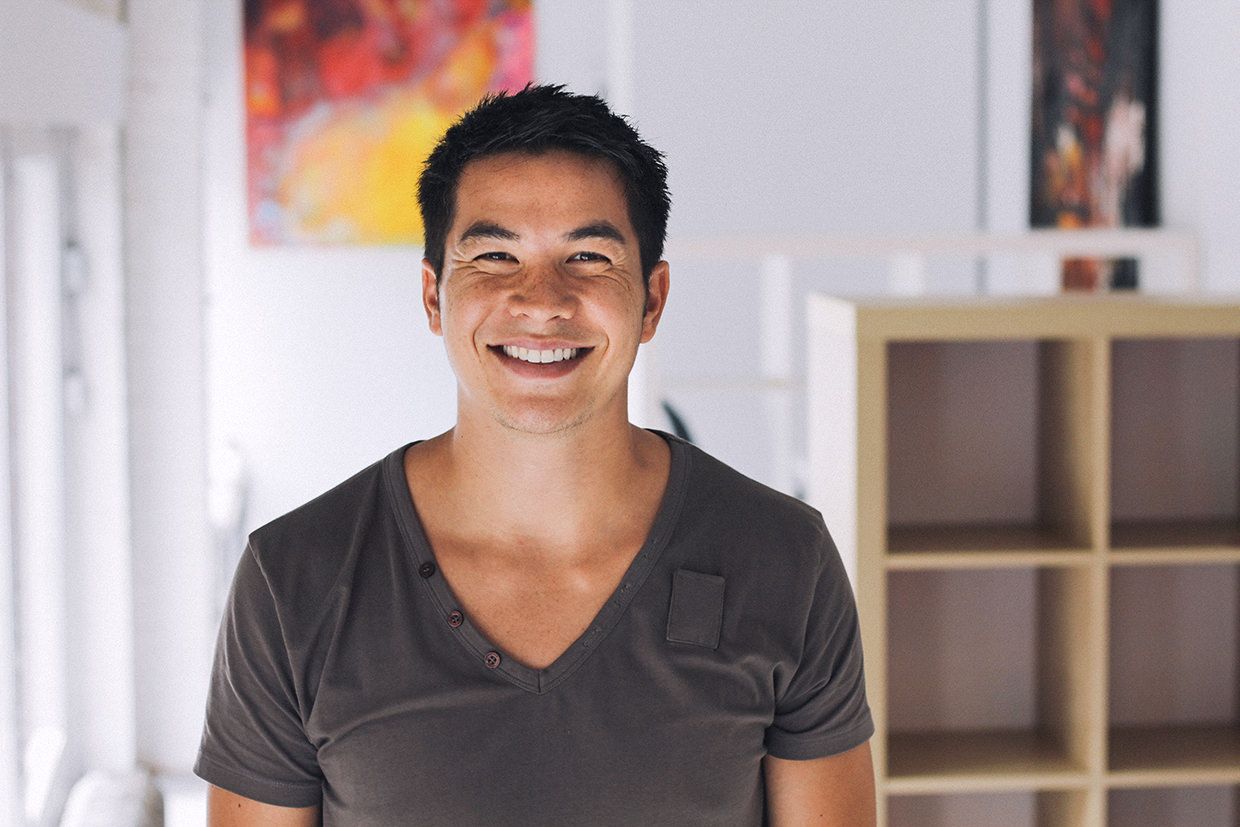
Mikael Cho is the Unsplash and Crew. Unsplash, is a photo-sharing site that boasts 6 billion photo views per month. Crew connects freelance designers and developers to potential projects.
Mikael discusses his unique career path, the intersection of psychology and design and chasing perfection. He also shares how a side project became his biggest success story.
Episode Transcript
[00:00:00] Sam Solomon: Hey everybody. This is DNFM. I’m Sam Solomon. DNFM is a show brought to you by Designer News, and this is our very first episode. We’re going to be discussing the latest stories in design and technology. We’ve got a fantastic series of interviews lined up, including today’s guest Mikael Cho. You may know him as the founder of Crew.
He’s got some fantastic stories, including how a Side Project saved his company. First, we have a few announcements. Our sponsor for this very first Designer News podcast is Envision. It’s a product design platform I’m certain many of you are familiar with. We’ve collaborated with them in the past and we’re glad to have them back supporting this podcast.
If you’re not familiar with Envision, you should go check them out. Envision is the design platform that makes prototyping and collaborating with your team seem effortless. Their team is always looking for feedback and insight to how you. The designer work and grow. If you’re curious what this whole Envision thing is about and don’t know, I highly recommend you go to envision app.com and give them a try.
Finally, the designer needs job boards open for designers as well as developers. There’s room in here somewhere for a should designers code joke. I’m gonna pass on that one. In addition to adding developer listings, we’ve added a few other features such as filters. You can filter things like location, or if it’s a remote friendly job, you’re listening to DNFM.
My guest, Mikael Cho is a designer, entrepreneur, and the founder of Crew. He also helped create the popular, do whatever you want. Photo sharing site. Unsplash. Mikael, welcome to the show. Thanks for having me, Sam. So let’s get started. In college, you studied psychology not design, not software, not entrepreneurship.
Yeah. How’d you end up, with a business in design and tech? In a weird way. So yeah, I’m from the US
[00:01:44] Mikael Cho: originally moved up to Canada right after I finished school. This was about eight years ago, and I
couldn’t find a job, so I was in Montreal, Quebec. I couldn’t speak French, so I pretty much every job was off the table and I was almost forced into design in that way.
So there was a few creative agencies that were up here and had us. Clients. So I was able to be basically the project manager who could handle speaking English, dealing with all the US clients, understanding, the culture and everything. And that actually allowed me to get my visa. So it was, yeah, that, that was actually this weird turn of events.
That allowed that to happen. But once I was in I, I was interested in it. And then I knew once I was in it too, that it was really interesting for me. Design. I just became obsessed once I was in the studio. And what what type of things drew you to design and give some examples of these things that, that, you were working on?
I think there was a couple pieces to it. One was what’s possible with design? So I noticed. The projects that we were working on and, something wouldn’t sell or something wasn’t working. And when you would have design paired with a nice concept and you figured out a way to make it connect with people, I didn’t know beforehand how powerful that could be.
So when I saw us making stuff and then it went from nobody wanting it to. A lot of people being interested. And then I started to understand why that was happening. I think this pulled back to psychology. That was the second part that I think pulled me naturally towards design was that it was so related to psychology, which was my background.
And I think everybody who’s making stuff on the web or anybody who’s making anything for any other person, an understanding of psychology is super important.
[00:03:28] Sam Solomon: And, later on you’d go on to start Crew, which was, which is then known as oomph. Yep. What triggered that? What prompted you to move and start that, your own business?
[00:03:41] Mikael Cho: Yeah. I think a lot of it was ‘cause I was so new into design, so when I went right to a studio I could. I was sensitive to everything that was happening and I wasn’t just, I didn’t know what the process was supposed to look like at all. So things that were going really well, I got that. But then also things that weren’t going so really stuck out to me too.
And I think one of the big things that I saw was just a lot of overhead, a lot of extra stuff that was going to, things that weren’t the creative work. And I think about 85% of our rate was going to stuff that wasn’t actually any of the creative work. It was all sourcing work, sales. Legal, all this stuff.
And then I also felt from the creative professionals there was this weird mix of people were there ‘cause it was secure, but, we’re getting burnt out. And people would cycle through, we’d have designers for three months and then they’d go freelance for three months and they’d go back to an agency for three months.
Just to kinda, I think it was almost like freelancing was a little bit of a break. And they had the freedom. So I started thinking while I was there, I was like, what if you could get the best of both worlds? Know what if you could keep the freedom of being a freelancer, but have the consistency like you were at an agency.
And that is a lot of the ethos behind crew.
[00:04:52] Sam Solomon: And in those early days when you were trying to, connect great designers and developers to these. To these projects. You guys started using MailChimp newsletters and woo fu forms, right?
[00:05:05] Mikael Cho: Yeah. So even though we had, we had expertise in design and development we did start with just a MailChimp newsletter.
A woohoo signup form. And part of this was because we had raised some funding. We were first time entrepreneurs. We didn’t really know what we were doing. We changed business models a couple times on that funding. So we had about six months left worth of cash. And the company, was close to, we had nothing.
And so we had to restart. And when you have six months to build up something that it’s a tradit like an online marketplace is what it is. And there’s two sides. There’s two types of people that you need to attract. These are typically the hardest types of businesses to start. ‘cause you’re building two businesses at the same time, essentially Airbnb, similar model.
And it takes a very long time to do that. So in order to, compress that, we knew that we needed to prove things very quickly. And we just proved every question we had, almost like one at a time in sequence. What was the thing that needed to be proved the most. At that moment, and we, if we could do that in two days rather than a month or two months, we could fit in to a six month period.
The amount of learning and speed that’s required to build a marketplace that might take three years. So that’s why we did a lot of that. That’s interesting. So one of the things I was gonna ask is how and when did you decide that? That concept was going to work. So I guess, so what are some examples of those questions you were trying to answer and what type of thresholds did you set for yourself?
Because I’m sure there’s
[00:06:34] Sam Solomon: plenty of people out here that have their own kind of projects or are starting their own companies and are trying to figure out, should they dedicate their time to this or move on to the next
[00:06:43] Mikael Cho: thing? Yeah. We were looking for. I mean we had started one of the early models when we were called Oomph.
It was like a Kickstarter type model. But for app makers, one of the biggest challenges, if you’re making an app, it’s even worse today if you release something unless you’re featured, it’s a pretty tough game. ‘cause if you fall in the ratings, you can disappear. So our concept was to help you build a following before you went up in the app store.
And we had built a lot of tools almost very similar to Kickstarter. It was a. It was a model where we could capture a lot of stuff that was about to go into the app store and help help it actually launch. And we ran into a lot of challenges with that. One of the challenges at the time apple was kicking a lot of apps outta the app store that anything that resembled an app store, so we couldn’t get any mobile distribution.
And we’re like, where do most people download apps? We’re like obviously the app store on the phone. So if we’re only on the web, it’s pretty difficult for us to get a lot of. Distribution and we weren’t allowed to go on. But one other thing that we noticed was we had about 20,000 app makers who had signed up.
And yes, they were interested in, building a following and those sorts of things, but about half of 50% of them actually needed help on their product. So they would write us and they say, Hey, do do you know any designers that could help us build this? Yeah, it’s great that we could build a following, but we actually have trouble building the product.
And these things naturally started to happen, so we just manually were doing it. With inside of Oomf at the time, and we were doing it so much that we were like, maybe this is actually the thing. The people are saying that this is a really big problem. We’re solving it with really simple tools.
They’re really primitive, terrible tools actually, just like email, we’re doing nothing special. But it’s helpful. So what if we just did a bit more? And people would probably, even more people would resonate with it.
[00:08:31] Sam Solomon: Did you guys have like a contingency list? Was there like a list of ideas that, that you guys were gonna keep going through and that just happened to be the one that stuck?
Or were you guys just roll the dice, we’ll see if this works and if not, we’ll figure out something next time.
[00:08:47] Mikael Cho: Yeah, when I’m thinking back to it, we knew we had that six months left. We were just coming out of a board meeting, if I remember, and it went terribly away. So that’s where we’re like, what are we doing?
And that was, an idea that we had right away we’re like people really like this thing, and let’s think about deeper that we understand that too. We were freelancers, we worked in studios but we didn’t jump at it right away. A big part of that was actually we lost some faith in ourselves.
I think, when you’re starting a business or you’re an entrepreneur you have to jump and believe in a lot of the things that you’re doing in order to get it to work. And we had been doing that for so long. And then all of a sudden when you don’t do that, it’s like you don’t, it seems like everything you’re doing is incorrect.
You’re like, you write a tweet and you’re like that’s not even, I don’t even know if that’s good anymore. Nothing. Nothing seemed good. So we’ve put that idea, we’re like, okay, we’ll think on that. And really it was, we asked a question to ourselves. If you had six months to build anything, what would you build?
And we just, every idea to start was on the table. And we didn’t even know if we were gonna build in this direction because we were four founders at the time. We wanted everybody in on the same thing. We learned from the mistakes of the previous six months. We, I think we built, we over built. A lot of stuff and I think that’s a lot of what we kept from when we started.
We knew whatever we were gonna build, we were gonna build it really primitively and slowly build up the features and keep it as minimal as possible. I love that quote. If you had six months to build anything, what would you build? That’s a fantastic quote. So you guys figured that this kind of, this concept might work.
[00:10:20] Sam Solomon: Once you guys latched onto this idea, what were the next, few weeks month or two? What happened after you guys were like, this might work.
[00:10:31] Mikael Cho: So we, the first step was figuring out if it was a thing that solved the problem at a big enough scale. Like we did, ran some numbers, I guess obviously is a big market.
A lot of people need designs. Talent is a big problem. So let’s prove it still that our way of connecting people is interesting. We won’t charge anything. That was the first proof point. So we ran that. And that was about three weeks. It kept going every, and we were sending projects every Saturday and you could just opt into those and it was just by a newsletter.
But then it was, okay, is this actually a business? That’s the second question. And can you make money? Can you charge money? The originally we charged 10 bucks, so we were like, let’s see. And ‘cause we didn’t believe in, we had this, a newsletter. So we’re like, we’re not gonna overcharge for stupid stuff.
We’ll just see if somebody will pay something for this. And then everybody was paying. The $10 listing. So we’re like, okay, people are willing to pay. We actually made more with this than we did with the. Boom, with 20,000 people signed up to it. So we were pretty happy to have some funds coming in.
And then it was great we got that working. How do we build a sustainable, and we looked at all the models. Cool. We do, we charge per posting. And what we really realized is, one, to create the most value for people and to create a sustainable business, we actually had to own the transaction. And we, because we, if we match people and we say, why do people want to be matched with somebody?
Good? Why do people wanna work with good people and work on good projects because they think it’s gonna go well? They think it’s gonna be a good experience and what’s gonna happen in the end is good. But if we’re only helping with the match, we can never see what happens in the end. But ultimately people will feel whatever happens in the end is because of crew.
So we are very, it’s very important then that we. Are helping make that process go well, and that’s where, that was the big second part where it was we need to build now enough value where we can accept a percentage on every project and people feel that’s worth it, and that’s gonna be a sustainable business.
Plus we’re gonna create a lot of value in the world. When I interviewed you for Signal Tower back in 2013 you had a really great quote when I asked you about the vision for your company. I’d like to read it real quick. Sure. The big thing is giving the power of trust and make working with anyone anywhere on the planet easier.
[00:12:45] Sam Solomon: I’m I want to ask you three years later, do you think you guys have lived up to that vision?
[00:12:50] Mikael Cho: We are still on that same path, so I don’t think we’re everyone everywhere. Obviously we’re still in design and development, creative work. We have expanded since that time into doing more types of creative work, but that is still the goal.
Simplifying the way that people can work together. I think it, it’s an interesting challenge. There’s a lot of great companies trying to solve this in different ways. I think if we can help people who aren’t parts of companies to solve this, freelancers, studios, entrepreneurs, independent makers who are teaming up to make things and we’re actually helping build the team to do the work I think that’s a unique piece.
We have with this, because basically teams are created on crew and then the work is done there. And you look at something like
Slack, right? You have to have a team. You have to have a team to come in and then you guys figure out how to do the work. But with us, it’s the team is assembled within Crew and then we tell you here’s the optimal way to go through and do these types of projects.
And I think that’s really interesting.
[00:13:51] Sam Solomon: Do team, can teams join Crew? Can you sign up like as a team and say. There’s a lot of, I know a lot of designers and Yeah. Engineers as well that, basically have worked on several projects together. Know they work well together.
[00:14:04] Mikael Cho: Yeah, so at teams, studios, freelancers for us, we only evaluate the work. So once we see the work and if that is high quality work, we’ll ask who did the work, and all of the people are vetted then. To be able to accept projects through crew.
[00:14:20] Sam Solomon: Gotcha. What happens with Crew in the future?
You said you guys are still trying to live up to that. I’m curious, like more specifically what are some of the next steps for crew? How do you guys get to that vision?
[00:14:31] Mikael Cho: Yeah. I think when we spoke last, at that time we were probably a month, we were probably doing about 30,000 to $50,000 in projects a month that were.
Being matched and ongoing every single month. With members, now we’re about 300,000, so that’s $300,000 in projects that are going through being matched with freelancers and studios. In over 30 countries we’re letting members in from all over the world. We have 17,000 members on the invite list.
Everything gets a manual check. We watch that through. And I think that really helps because if we’ve got a strong community on both sides, I think everybody is happy because you can create great work, you can work with great people multiple times in different ways, and that’s what happens in this world.
Freelancer, the number one way freelancers get work most of the time is through referral. And if we’re able to capture a lot of those different types of relationships within crew and people feel safe because you are a part of Crew that’s that level of trust. I think it goes back to the vision.
That you said, making it feel safe and easy to work together. You shouldn’t be, you shouldn’t be worried about constantly. Like that person across from you is trying to screw you. And I think a lot of the early places to find work online you’re very cautious. You’re like, half of you is afraid, half of you wants to do the work, but the other part of you is.
Like doubting seriously that this thing is gonna work out. I’d like to talk for a second about marketing because crew approaches marketing from a little bit of a different angle. I wanna read a piece of content that you guys have on your website, about marketing.
[00:16:06] Sam Solomon: It says, marketing today is defined by how useful it is for your customers, and the bar for useful has risen substantially where blog posts, infographics, and webinars were once marking gold. Websites, apps and tools are now taking over. If you’re trying to get a new idea off the ground, you must aim to create extreme value with your marketing.
This is the only knife that can cut through the clutter of today. We spread the word about crew by building tools and creating value. It works, it saved our company. I believe specifically the tool that is referenced in this quote is Unsplash. Yeah. Why did launching that product save crew?
[00:16:47] Mikael Cho: Yes. That first, again, I think it came down to that pressure that six months that we had and being that very time sensitive thing. And we knew that we couldn’t do normal things. And I think this is actually for most companies because it’s the clutter thing, there’s just so much stuff going on.
If you look at your Twitter feed and all these these things and to really stick out, you need to create something so good, so much different than anything else that’s there. And that was. The thinking. We didn’t know what we were gonna create, but we just had that running in the back of our head.
So when we knew that we needed to get crew and oomph, scaling a bit more, like reaching more of the market. We knew we had to use that. We didn’t have money to spend on ads, we didn’t have money to do anything, so it needed to be free. These were the constraints that were created. We had, it was gonna be me.
So I, I have some design skills, but my development’s not that great. And when you’re building tools that’s tough. But those constraints ultimately resulted in something that was simple unique. It stood out because of those things. And that is a recipe that we used on multiple, we call ‘em special projects since then, they’re basically just a bunch of side projects that all relate back.
To crew. In some ways it’s useful for the same type of person the way we looked at them after Unsplash, so Unsplash photography site we started about two months after Crew came up. We had the leftover photos when we were finally doing the actual landing page of the original version of Oo, and we took 10 extra photos, put them up, gave them away for free.
Thought maybe a hundred designers would be interested in that. Put it on Hacker News. Never had success at all. Like I was actually I actually thought it was so bad that I wanted to put it on Hacker News first to just tell me that it was so bad like that nobody would upvote it. I’m like, this is this is the least risky place that I can put this because I, I think it’ll either get down, voted, or just, it won’t, nothing will happen.
But at least I’m putting it somewhere and maybe I’ll figure out later in the day, somewhere better to put it. But then I got a text message from somebody and he is Hey man, where’d you put those? It was actually the photographer. And he said where’d you put those photos? ‘cause my portfolio site is blowing up right now.
And I knew I only put it in one place. So I went back and it was number one. Never saw that. I checked the traffic. I was using public Dropbox links ‘cause like I really didn’t think anything was gonna happen. And all the public Dropbox links were breaking. Because of the traffic. There’s 20,000 downloads and actually the we did 10 photos every 10 days.
So we said, you could put your email in and we’ll send you the next 10 photos. I didn’t know where we were gonna get those 10 but I just wanted to see if this was really interesting for people. And it was crazy to open. We were, I was using a Google form for that signup and to watch a Google form live.
I think it was. It was almost a thousand signups a minute to see that happening. And then to, for Google forms to tell you that you hit a limit on the Google form, number of rows. I was blown away by that. Never expected that. This was a crazy thing. And I wanted to figure out what made that happen and then how could we repeat that?
And that’s the philosophy that’s been behind. All of our marketing pretty much to date. To me, what is so interesting about Unsplash is the concept. Obviously hindsight’s 20, what, 2020? But the concept seemed like pretty, pretty simple, like pretty obvious. But I, there’s a great quote.
[00:20:04] Sam Solomon: There’s something, design happens with constraints, artwork happens without them. You guys had to have something that was free. I assume the, a lot of the problem was. It’s confusing buying stock photos, sometimes they’re really expensive. Yeah. There’s an opportunity because now everyone’s got these really nice cameras that they carry around in their pockets.
It, to me is just really incredible. I think the last time we spoke, you told me that there, you guys had like around 500 or 600,000 photo downloads. How many photo downloads do you guys have now?
[00:20:36] Mikael Cho: So now per month. It’s 6 million. Oh, man. That’s incredible. Are you, and just talking about the, that spreadsheet filling up, I assume that, obvious, that’s an obvious we’re onto something type of type of project.
Yeah. Like we’d been. For years when you’re building things and you’re grinding and you’re, it’s it feels like you’re forcing every single person to sign up and you feel like you’re just snake oil salesman sometimes and all of that, and you’re, what you’re building is shit, and people are just signing up to be nice to have something that organically that happens.
It’s a, it is a special thing. And it can happen. I think it it’s funny because it’s almost like counterintuitive because I didn’t know how to really code that site. I couldn’t make accounts, I couldn’t figure out how to build a backend. So in doing that, it just kept it super simple, there was no accounts and we removed everything.
And I think that has been a big, that’s a big thing in all products. Now we’re seeing people, you’re removing login, you’re removing things. They’re building. Really interesting tech to do that, but it’s a removal of stuff and I think that’s what we’re seeing now in a lot of good product design.
[00:21:42] Sam Solomon: Yeah. It’s it’s interesting. You guys, it was originally like this. What’d you pay $20? For a Tumblr theme, is that, I have to ask you, is that the best $20 you’ve ever spent?
[00:21:54] Mikael Cho: Yeah. Yeah. Except for the first time I had, I saved up 20 bucks when I was little and got candy at the drug store around my house.
And the first time I had candy, because I still remember my mom made me return it all. But the, I remember that feeling, oh man. And the feeling, feeling at the time was, I think, pretty similar to this. But yeah it’s definitely different when, for three years you’re trying to figure out something to hit.
And I think a lot of people who make things, yes, you make things for yourself and, but I do it’s fun to see when other people. See something like, you see it, and it’s wow, that’s really cool. They thought it was cool too. Yeah. I think there’s, a ton of designers and developers out there like working on projects on nights and evenings and I think, it’s like a dream to have a project that.
[00:22:41] Sam Solomon: Would touch even like a, a small fraction of those that Unsplash does, what are there any, is there anything that, people working on these projects can take away that you can give them any sort of of advice that would, that maybe helps them either get distribution or make it work?
[00:22:59] Mikael Cho: Yeah, I think a couple things that I’d find useful consistently still today. Is that reduction? Of stuff I think you can get easily get carried away, especially when you know how to make stuff. If you’re a designer or developer, it’s very easy to design and develop things but boiling something down to its essence.
I even remember looking at the words, free, do whatever you want. I was saying that through my head and resang that line over and over again, and I was trying to actually replace. That, do whatever you want with something. I’m like, but wait a minute. That’s the best thing. And that describes it perfectly.
And then we’ll just link that to Creative common Zero and more people know what, do whatever you want means than CC zero. But at least we’ll cover both. Being able to think through those things because you’re not spending this extra time designing these other things. Developing these types things I think helped a lot.
And then the constraint of the time, and knowing that also I’m working within a Tumblr theme. There’s constraints there too, and you can’t just build whatever. And I remember at the time I’m like, I’m gonna give myself the afternoon. ‘cause I thought that’s what the project was worth. I thought the project was gonna be worth three hours.
Three hours equals this, it could bring in this many project. That was the math that was going through my head at the time. And so it’s great when you spend that time. I think another piece is it keeps the stakes low, so when you don’t overbuild stuff, your expectations are just so much lower.
And it allows you to continue making lots of things. And when you make lots of things, that’s when you can run into those really great ones. It’s only through the volume that you’ll get there, right? So eventually you keep working on things. If it doesn’t look like it’s gonna, it’s gonna take off. Move on to the next thing, and maybe that one will strike a chord somewhere.
Yeah, so it’s what process can you use that’s gonna allow you to create volume so you don’t get discouraged? And I think this process, keeping it simple, you, your expectations are so low that you almost can never be discouraged because every project is gonna be a success. If you’re spending two hours on something, your expectations are so low, even if you tweet it to the people that you already know and a few of them like it back, you’re gonna feel like you spent a few hours and it’s not gonna feel like a waste of time.
And one or two of those may be something really special. And that’s interesting. ‘Cause I think, like you’re obviously a lot of the people that are. Listening to the show are designers. And I feel like there is, and I see this in myself, but a lot of designers are hesitant to show their work.
[00:25:21] Sam Solomon: And hesitant unless they believe that it’s perfect. So perhaps you can make up. You can make up for perfection with volume. That may be something that encourages people to move on to the next thing.
[00:25:35] Mikael Cho: Yep. Yeah, I think it’s quantity gets you to quality. You said something that, I never thought about you writing the copy line free. Do whatever you want. Photos.
[00:25:46] Sam Solomon: I actually don’t think I would have ever known. I think with Unsplash, that was my first experience seeing something. That, or at least seeing that creative common zero license, which is interesting. And it’s, I probably would not have read that that license.
I’ve just been like, oh, whatever, gotta attribute this person or whatever. But the fact that you just simplified that down to, yeah, you can do whatever you want with this. And I’m not gonna, you don’t have to pay for it. I think that says a lot about your copywriting.
[00:26:20] Mikael Cho: I think it was trying, again, this like sim simple thing, and what in, how would I say this to a friend?
And when you make things too, like you can say, how would I make this for a friend versus. How would I make this for a million people? I, when, 10 million people or a million people are gonna read I get it now too because I write a lot and I can get swept in it. Like I’m reading a lot about writing and trying to be a better writer, and I will, I can see myself starting to obsess too much over sentences.
So sometimes you need to. Trick yourself because yourself is you’re naturally gonna, you’re gonna feel like you’re getting good at something and then you’re gonna go into this thing where you becomes your craft and then you care about the actual work more than the result of it and the process.
And it can get swept away in that stuff. So one of the tricks I do for writing is actually write most of my stuff in Facebook. Like I actually, I write it as a Facebook. Because it forces me, I do it on my phone too. It forces me to, changes my mind. And sometimes I’ll even do it as a text message. Your blog posts, your writing starts as a Facebook post that you’ve written on your phone?
[00:27:21] Sam Solomon: Yes. Wow. ‘Cause I was gonna ask you let’s actually, let’s talk some about writing. So the last time, like the last time we had a conversation. I think you had just started trying to write regularly and now I’ve seen your work in like the next web your contents all over the crew site.
What what drives you to write what you know what, where do you get that urge to write? What? What do you get out of that?
[00:27:44] Mikael Cho: I think it it is a practice that I’ve just en enjoy having a practice a creative practice. I feel like it’s an outlet for some, like I originally why I did it, a lot of it was to help us grow.
But now the purpose has shifted more towards. Just me understanding. When I dissect a problem, my best way to di dissect it is to write a post on it, because it forces me to think through all the angles. I can think through my one angle, sometimes you’ll talk to a friend, right? You’ll have a perspective on something.
And you’ll say it right there, but you’re actually missing a couple things. And I noticed that when I would say those things, I’ll actually write those down because I probably felt strongly about something in that moment. So I’ll write down what I said to that friend and later that’ll become a blog post probably, and I’ll dissect it and I’ll find either I was completely actually wrong once I start doing the research and understanding what’s going on.
And I will, one of the things I’ll do is I’ll write the whole post and then I’ll look at it. As if I was the biggest hater in the world of me, of myself, of this topic, and what would the hater say to this thing? And that’s been really helpful. ‘cause then you look all the way at the other side.
What does that look like? It doesn’t mean you change your perspective, it just means you understand it. And you can refute, you can hold strong to, what you’re writing and you really understand topics. Then you, you’re reflecting so deeply. On these things. So I enjoy that process. It’s the way that I get to create, I don’t get to design as much today.
But through the writing, my form of being able to still like design in a way. And I like having that ability. That’s interesting. Yeah. I’ve always found the most difficult part about writing is that you have to make logical arguments for things that you believe. And when you as you said, when you have those discussions in your head it makes sense.
[00:29:35] Sam Solomon: But when you write something down, there’s it’s not as abstracted. You have to actually make, you have to come to logical conclusions or else people are gonna be like, ah, you’re, you’re a loon. So I, that’s interesting. And you can, you can always write a perspective, but if it’s not well informed, ‘cause that’s part of my purpose is to understand a topic better. And I, and through the writing, I can do that for sure. Mikael, I think we’re we’re almost out of time. This has been a fantastic interview. Are there any last kind of comments or anything else you’d like to tell the designers out there?
[00:30:10] Mikael Cho: I think, I really enjoy. As I said, why I got into all this stuff, like what’s possible with design, I think it’s so important. Design crosses so many things. Design is in writing, it’s in products that you make in everything. And I noticed this so much more now as we’ve grown to a company, about 40 people.
Operation design, just everything. You look at these things like how do you Trello, project management tool for instance, how do you write that card up so the next person can understand it the best way possible? And that’s designed too. How do you write a message, just a text message to somebody so they understand that better?
And I think design seeps into everything. So it’s just an exciting thing. If you have that mind, it’s gonna just seep into everything. It’s gonna be required, I think so much more. It’s something that I just look for naturally. I can see it. You can see what, when we have, let’s. A designer on our team who ends up doing another type of project that’s not designed, it’s not like product design.
Let’s say they’re helping organize one of the events. You can see the design touches, right? They’re thinking like two steps ahead. They’re saying, okay, these people are gonna come in, they’re gonna okay to create the best experience when they sit down. Actually, this should be these chairs. It should be these chairs.
And how could we add an element to surprise? We could put this other thing on the table, that’d be pretty cool. Maybe we’ll add a t-shirt, we’ll do this other, like that’s the level, that’s the experience design and it seeps into everything. And I think that is really, where everything is gonna go.
[00:31:32] Sam Solomon: Success in business is gonna go even individual Kale. Thank you for joining me.
[00:31:36] Mikael Cho: Thank you, Sam. Thanks a lot.
[00:31:38] Sam Solomon: One of the things we’d like to do is highlight feature job board listings. Here’s who’s hiring right now. Slack is looking for a product design manager in San Francisco. CV is hiring a lead UI UX designer in Berlin.
Intercom is hiring a senior product designer in Dublin. And finally, ThoughtSpot is looking for a brand designer as well as a product designer in Palo Alto. And now for top stories. Sketch is going with a new licensing model. There’ll be no large paid release of Sketch 4.0 instead, sketch will be charging for updates once a year.
If you purchased Sketch more than a year ago, you’ll get six months of updates. If you purchased it recently, you’ll receive one year from your purchase date of updates. Think the key thing here is that you’re paying for updates not to use Sketch. You’re free to use the current version of Sketch as long as you see fit.
My take. Will sketch cost more for designers to use. If you weren’t expecting to use a new version every year, then the answer is likely yes. Many will be upset with this move, but I don’t think it’s worth all the fuss. Subscription models generally force companies to continuously improve. If that’s the case with Sketch, then I’m okay with it.
Dropbox has a few new productivity features. I think the big one in the design community at least, is the ability to scan and document. So you can now take picture of your mockups or your notes, and Dropbox will attempt to create a scanned version of your document as opposed to just taking that picture.
So you. Pictures of things at an angle or so it seems as someone who sketches a lot, I hate keeping paper. I was hoping I’d be able to take advantage. Unfortunately, it looks like it’s an iPhone only feature right now. The other I think, big update that I didn’t necessarily know about was that Dropbox now has Microsoft Office co-authoring.
Essentially this gives you Google Doc level of collaboration within the office suite. So if you’re a company that. Or working for a company that runs off Microsoft Office you might be able to take advantage of it. The bookmark is dead. It’s an old concept from the web. Our browsers keep track of links that we want to read or reference later, and in some ideal world, maybe we actually do that.
Z Fernandez article brings a little bit of a different. Thought to it, maybe we can use natural language search to surface bookmarks instead of having to click two or three times to try and find the bookmarks we’re actually looking for. I think the concept gives you a few things. Maybe I want to see all the pictures that are green or I want to see all of the articles that were sent to me via email by a friend.
I think that there’s a lot of kind of like Facebook-like stuff you can do with that. That would require not just saving that link and adding a title, which is how bookmarks work now, but you’d have to keep the metadata associated with that. I think the privacy advocate in me is a bit worried, but I have no doubt that would be a useful service.
Would people pay for it? I don’t know. I think there are things similar to that. I’m not a pocket or Insta paper user, but I think there are a lot of bookmarking services that are at least getting close to that designer news. What are you working on? I thought it might be appropriate topic.
Considering our guests today as crew, they’ve got a ton of side projects. I’m not entirely sure about the best way to go through this, so I’m just gonna walk through a few of the, my favorite projects that were posted. Deb Dojo. Deb Dojo is a project by Tony Lee. He’s been working on it for about a year.
It’s basically a series of videos that can help teach you things like Laravel, JavaScript, golf. There’s one that has game development in there. They’re all essentially several development related things. I will say the videos are well produced. If you’re interested in any of those things, I’d encourage you to check out his project.
Perhaps my favorite project that I saw was a project called Pun, Bott. In case you ever wanted a robot to provide you puns on demand at work Pablo Stanley has built one. Basically you put in a, a line or two and I think it picks up one of the nouns. Maybe if you say cow, it’ll make a cow pun.
But anyways, it’s a Slack edition i’ve added that to our Slack channel, one of my Slack channels, and it’s already been a hit. While software may be taking away jobs, I will say though that comedians, you’ve got some time. And the last project I wanna mention is graphical cooking.
This got the most up votes. On the post, it’s a series of cooking illustrations by Johannes Ien. Each illustration breaks down the recipe into these individual ingredients. It looks like a molecule almost. But it shows how all these ingredients go together and gives you a quick way to, to see the complexity of the recipe.
And that concludes our first episode. What’d you think? Did you love it? If so, I’d encourage you to subscribe. We’ve got a fantastic lineup of guests coming up in these next few shows. If you’ve got feedback or ideas about the show, you can reach out to us on Twitter at designer News bot, or to me personally at Samuel R. Solomon.
If you’re interested in supporting the show, please get in touch with us about sponsorship. We’d absolutely love to have you. Once again, my guest is Crew founder Mikael Cho. I’m Sam Solomon, and this is D-N-F-M.